
How my neurodivergence shows up in my painting process
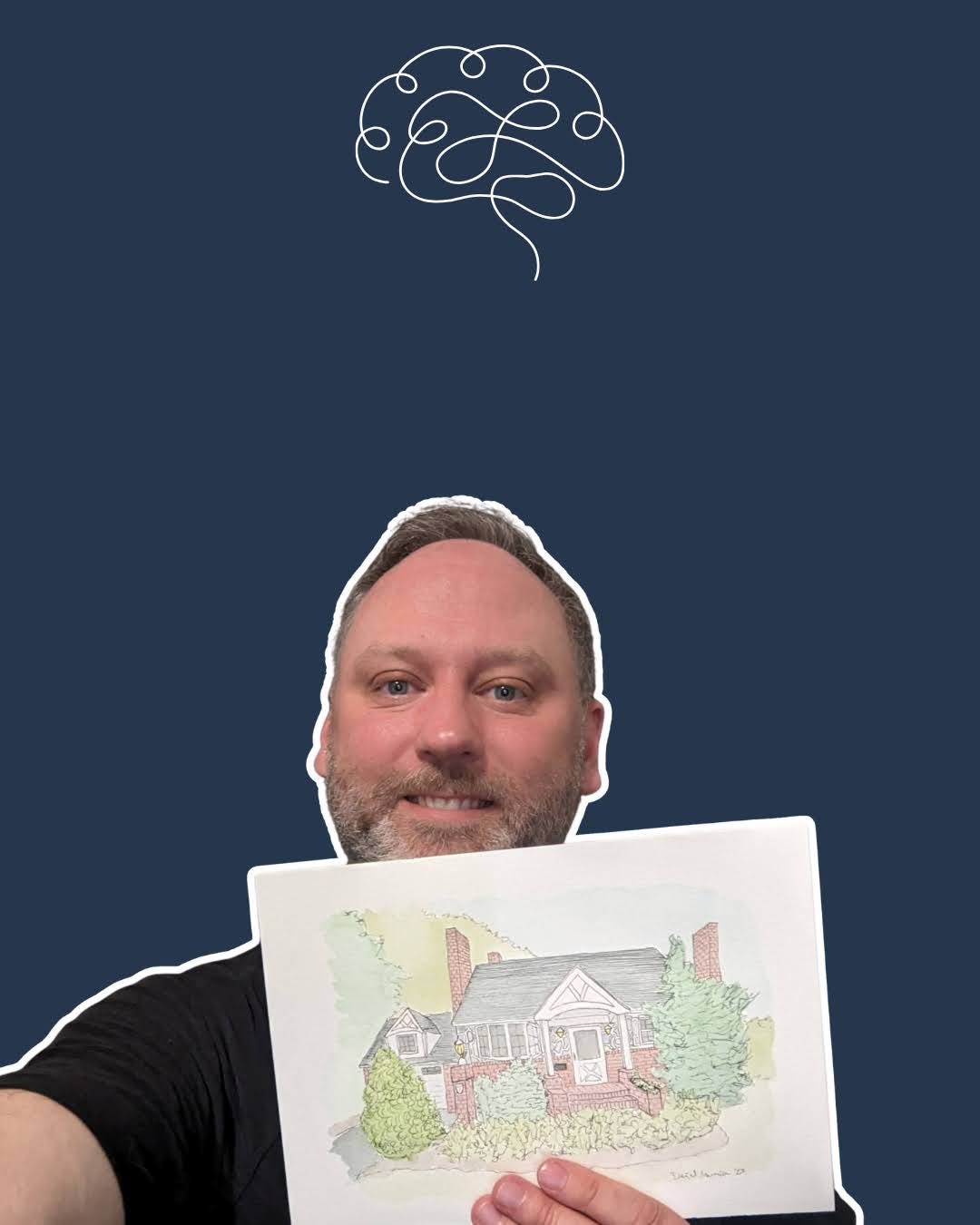
Hi, I'm Daniel, and I'm a late-diagnosed neurodivergent artist.

I didn't know I was neurodivergent until I was already in my forties.
That's becoming a more common story these days, as the window of what's considered “neurodivergent” is getting a bit wider as new studies are done.
Executive disfunction is a thing
I knew that I struggled with things as an adult. Things that other adults around me didn’t seem to struggle with.
For example, asking me to plan a vacation for next year was like asking me to assemble a car from the ground up - I didn’t have the first clue where to start. Nor did I understand how everyone except me seemed to already have the instruction manual!
If you asked me to give you three words to describe myself, I absolutely froze up. I still do. That’s so much pressure to put on me to sum up my entire psychological profile in three words!
How my neurodivergence and my art are linked
My diagnosis came at about the same time that I first picked up a brush and started painting (you can read more of my origin story here). So the two are kind of linked in my personal timeline and in my psyche.

Being neurodivergent as an artist can be really helpful in some ways.
But there are days when it’s an obstacle that I simply cannot surmount without burning myself out. Not good.
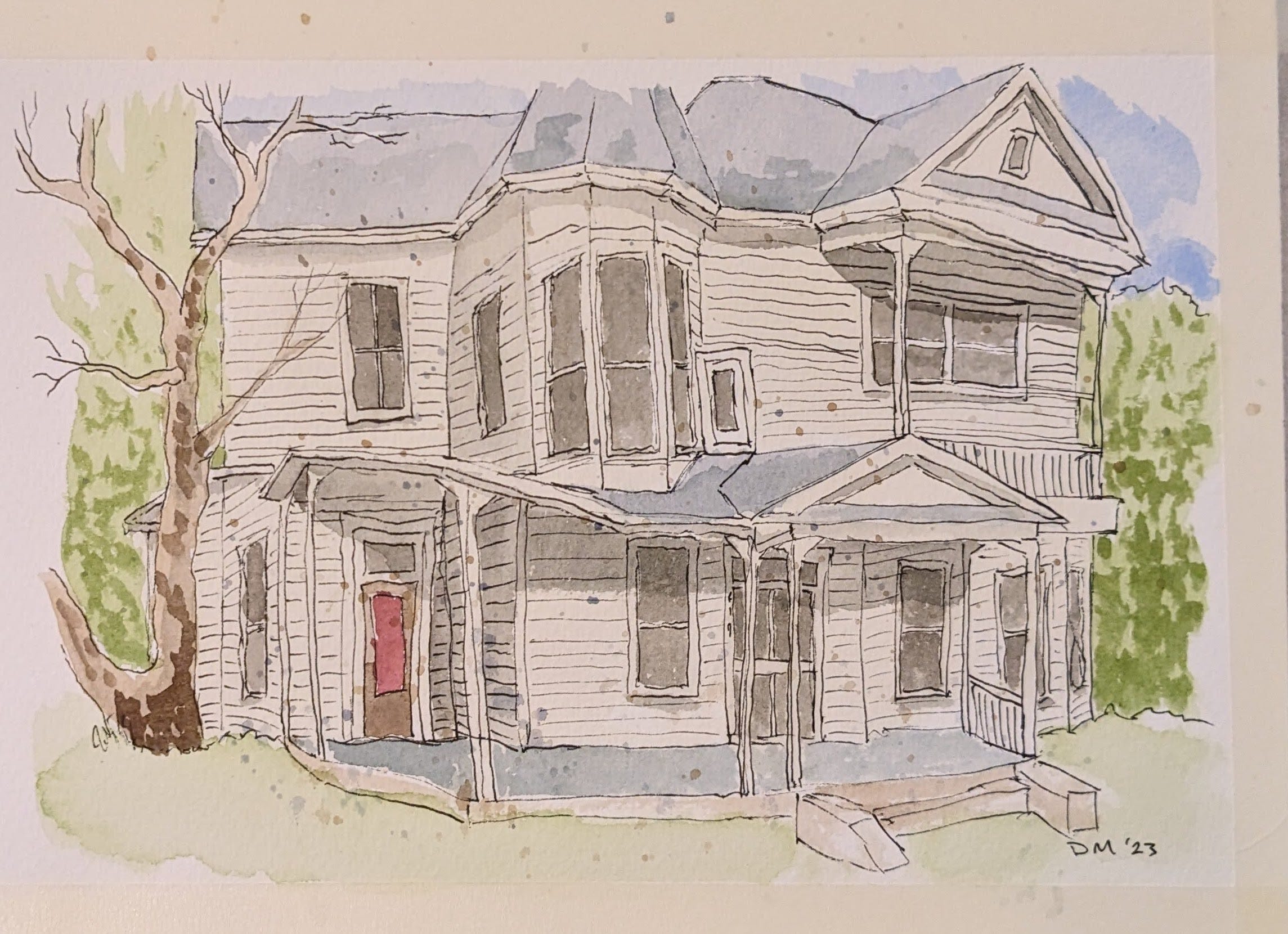
So here are the ways - good and bad - that my neurodivergence shows up when I paint your house.
The Good
👍 Hyper-focus
Once I’m in the zone, I rarely get distracted or let anything interrupt the process.
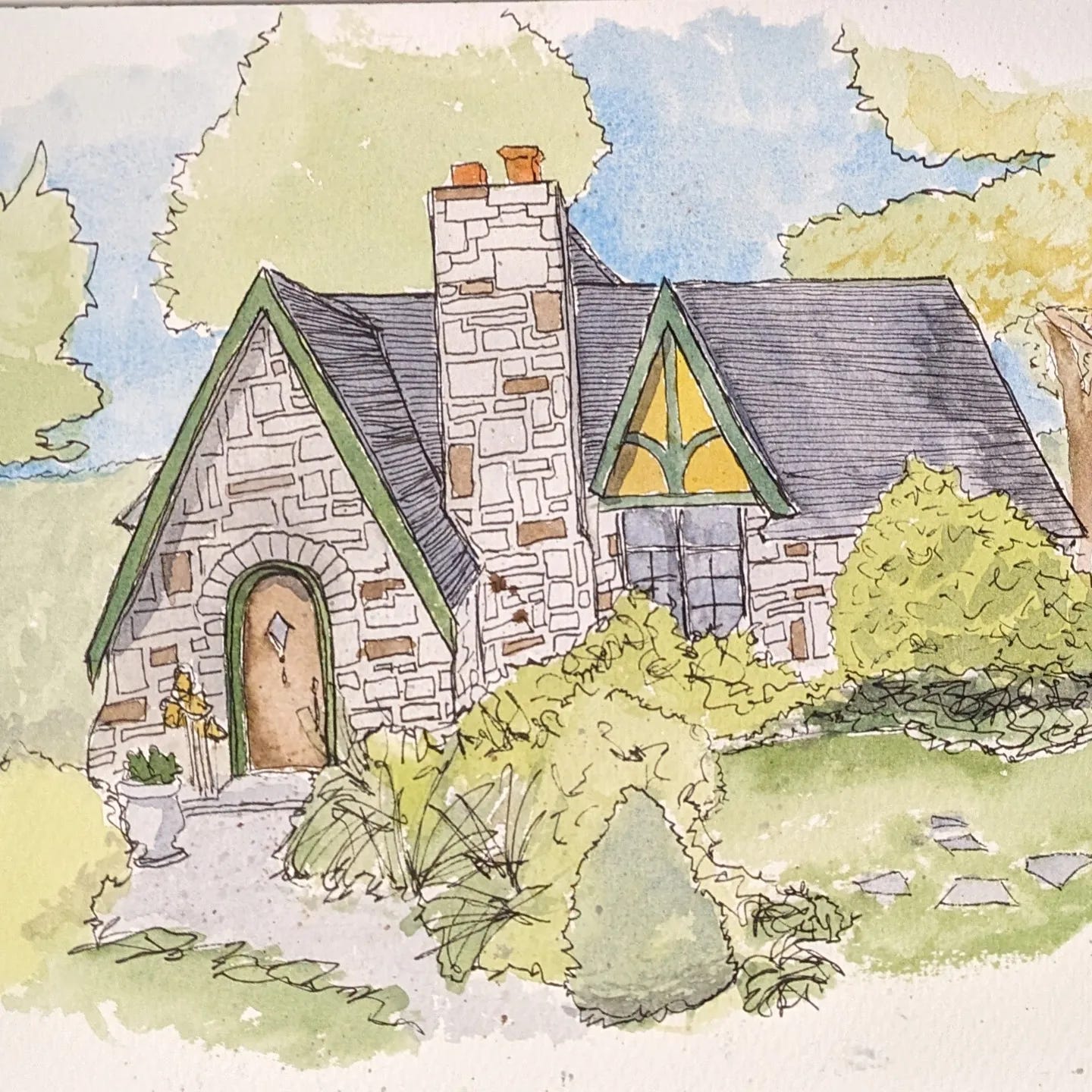
Watercolor dries fast. I have to be alert and mindful whenever I’m putting paint down on the paper.
Hyper-focus also allows me to “zoom in” on a reference photo and catch the little details that neurotypical people might miss.
👍 Sensitivity & empathy
People tell me stories about their houses.
“I grew up here.”
“My son loves to play under that tree.”
“This is where we got married 50 years ago.”
“This is my friends’ first house together as a married couple.”
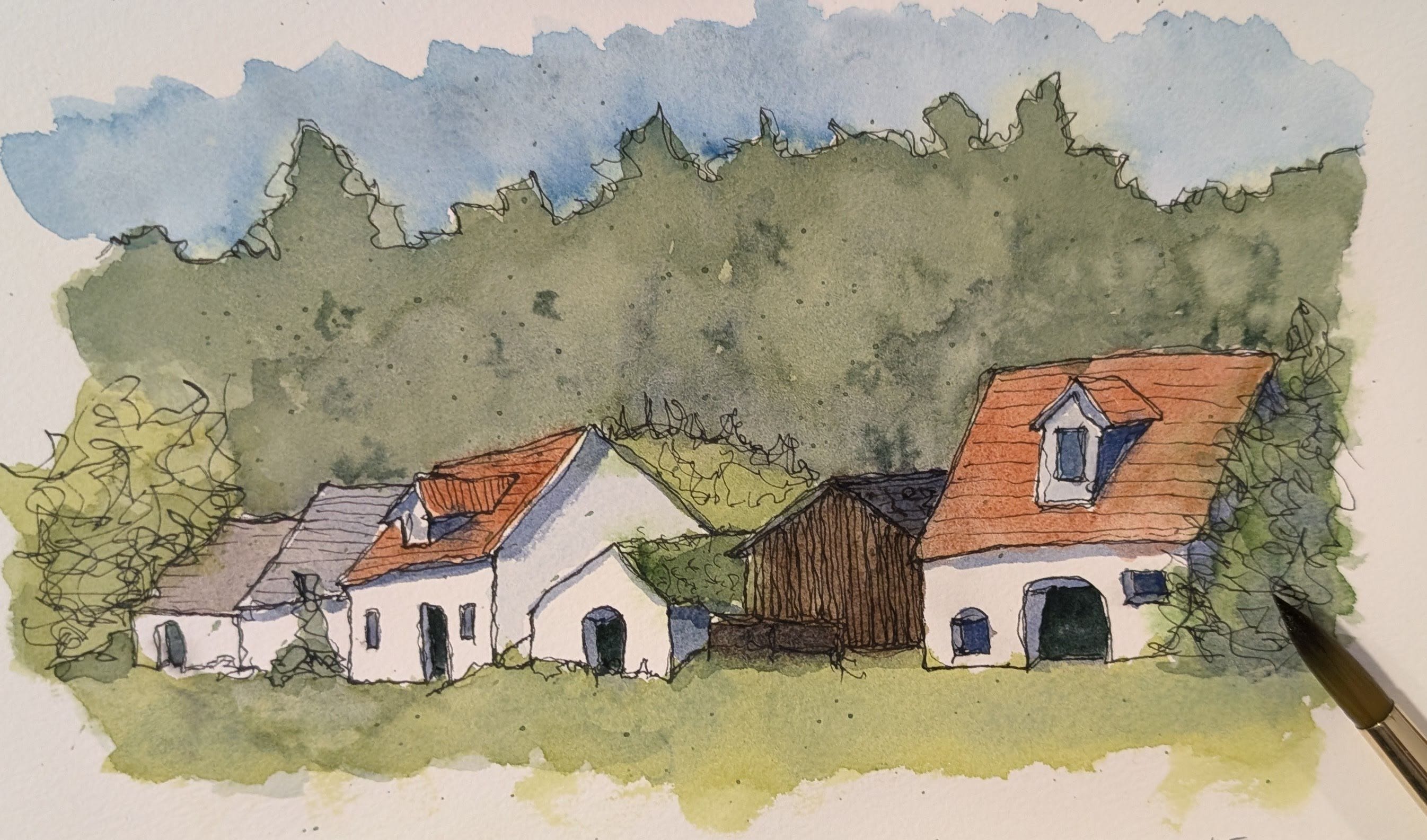
I can take it all in and then try to paint these stories into their house portrait.
It becomes more than just four walls and a roof to me.
The Bad
👎 Perfectionism
Sometimes it’s hard to even start, feeling the pressure of “getting it right” and the fear of making mistakes.
“That’s not how that window really looks.”
“I didn’t really capture that color the way it looks in the photograph.”
“They’re definitely going to notice that (tiny) mistake and ask for their money back.”
I constantly try to remind myself of two things:
They didn’t hire me to draw an architectural blueprint of their house.
Nothing in the history of the world has ever been “perfect”.
👎 Burn out
When something grabs my attention, I’ll get SUPER into it, and do INTENSELY every day. Sometimes I feel like I can’t sleep because I just want to get up and do THAT thing.
Then inevitably, I burn out on it, and nine times out of ten I’ll drop it completely after a few weeks.
During the pandemic, when we were in lockdown, I began learning 3-D modeling and animation on my laptop. I took every course (free and paid), searched every YouTube rabbit-hole, and got up before the sunrise for weeks until I had a really cool model of a walking robot.
Then suddenly - poof - I lost interest. One day I woke up and I just didn’t want to do it. And now I probably couldn’t even tell you where to start - everything I learned has completely disappeared from my brain.
Some of my interests recur again after a dormant period. I’ll take a break for awhile, and then come back with renewed energy. Painting is like that - my interest comes and goes, depending on my moods and the season, and how much I’m into something ELSE at the time.
But I’m glad that I keep coming back to it, it brings me a lot of peace and happiness when I’m being creative.
That’s just the beginning…
There are probably several hundred more ways I could elaborate on, but these four make the biggest impact on my work as an artist and creative.
I wanted to share this today because I know there are a lot of us out there in the overlap of that Venn diagram.
Do you struggle with any of these - as a neurodivergent creative or not? I’d love to connect and hear about it.
